Legacy systems without migration: workflow automation overlay
- 6 Jun 2026
- In Blog, Delivery
- ~8 min read
Many SMEs run paid-for legacy line-of-business software that holds inventory, jobs, or approvals. Replacing it is expensive and risky. Meanwhile finance, customer records, and field tools never receive the same update at the same time, so hand-offs fail in the gap between systems.
The Structural Bottleneck
Legacy vendors often gate APIs, webhooks, and custom fields behind upgrade paths. Internal IT capacity is limited, so teams export CSV files and re-import them. Each manual bridge introduces timing errors and breaks audit trails. Full migration projects stall because daily operations cannot pause for twelve months of replatforming.
The Intelligent Overlay Architecture
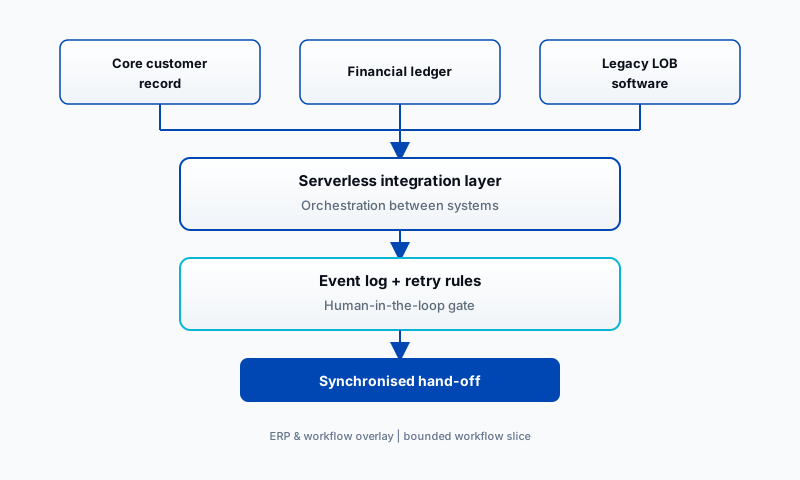
Implementing the Bounded Workflow Slice
- Pick one painful hand-off (approval to ledger post, job status to customer record).
- Document read and write boundaries; no direct production writes until staging passes.
- Implement idempotent sync with visible error queue for ops staff.
- Align data cadence with job schedules and review meetings.
- Expand only after written acceptance on the first slice.
Proving the Operational ROI
- Hand-off latency (hours from trigger to all systems updated).
- Manual re-key events per week trending down.
- Reconciliation exceptions caught before month-end close.
- Staff time returned to customer-facing work (survey or time study).
The Yarli Delivery Note: Every workflow automation slice must begin with a tight bottleneck-led discovery pass, running inside a secure staging environment using production-shaped data parameters before any integration touches live production databases.
See Connect your systems on Services.
Published by Yarli Data, Sydney. Australia-wide delivery for operational Data and AI pilots.
Plan a workflow overlay slice
Name the hand-off that fails most often — we will propose an overlay slice with written acceptance.