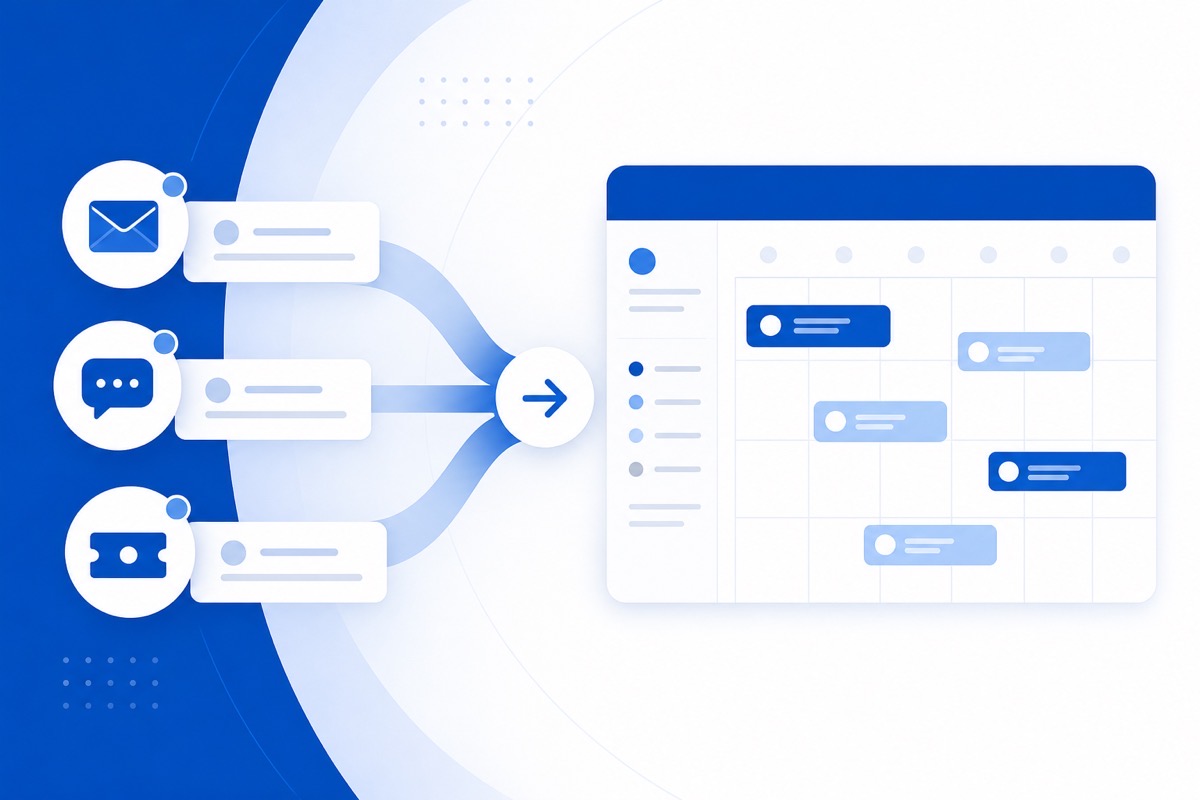
Single view for support: scheduling and ticket context for operations
- 10 Jun 2026
- In Blog, Operations
- ~7 min read
Operations teams juggle phone messages, email threads, chat tools, and ticket histories when scheduling field work or triaging support. Context lives in five places. New staff ask the same questions veteran coordinators answer from memory, which caps throughput during peak weeks.
The Structural Bottleneck
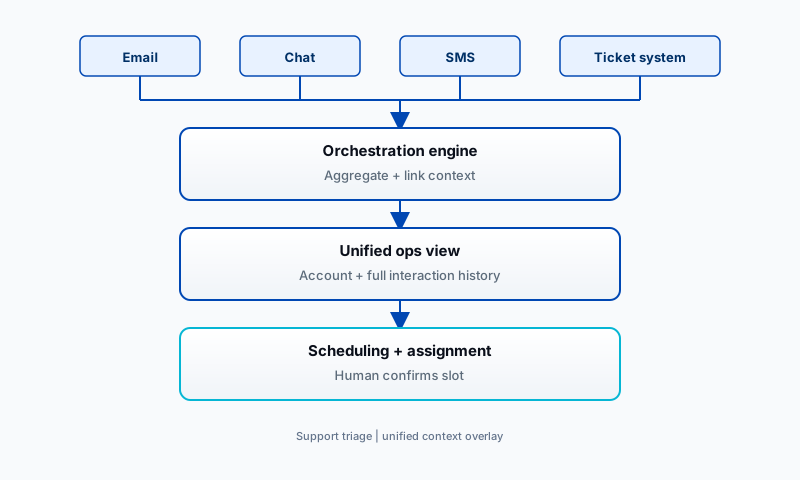
Each channel has its own notification surface. Ticket systems store cases but often miss informal commitments made in SMS or voice notes. Scheduling tools know slots but not why a job was escalated. Without a unified context layer, coordinators rebuild the story on every interaction.
The Intelligent Overlay Architecture
Implementing the Bounded Workflow Slice
- Start with one job type or ticket category that generates repeat scheduling friction.
- Index only approved communication sources; respect retention and access rules.
- Surface last ten touchpoints and open commitments on one screen.
- Keep assignment and customer promises behind human-in-the-loop firewalls.
- Measure deflection of repeat internal status queries.
Proving the Operational ROI
- Time to first meaningful response on inbound requests.
- Schedule changes requiring callback because context was missing.
- Jobs booked per coordinator per day at stable quality.
- New staff time-to-competence on triage (weeks to independent shift).
The Yarli Delivery Note: Every workflow automation slice must begin with a tight bottleneck-led discovery pass, running inside a secure staging environment using production-shaped data parameters before any integration touches live production databases.
See Support and scheduling on Services.
Published by Yarli Data, Sydney. Australia-wide delivery for operational Data and AI pilots.
Unify support context
Describe your scheduling friction — we will map a unified context slice with safe access boundaries.